
Housing Policy
-
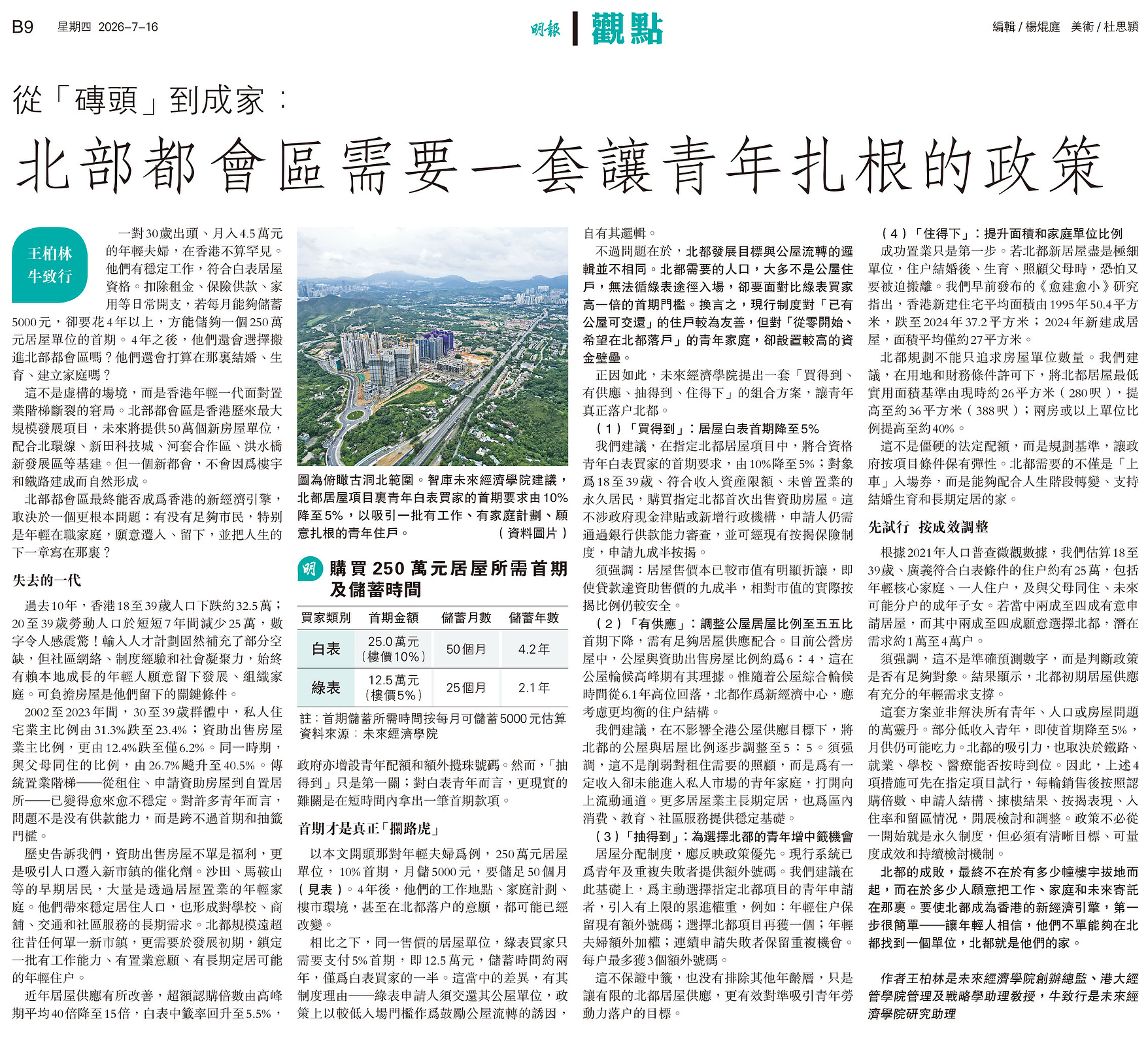
From Bricks and Mortar to Building a Family — The Northern Metropolis Needs Policies That Help Young People Put Down Roots
A young Hong Kong couple earning HK$45,000 monthly would need over four years to save the 10% down payment on a HK$2.5 million HOS flat—illustrating how the Northern Metropolis risks failing without affordable entry points for young families. With Hong Kong’s 18-39 population falling by 325,000 in a decade and homeownership rates among 30-39 year-olds plummeting, the article proposes a four-part pilot policy: cutting White Form down payments to 5%, balancing public rental-to-subsidised housing at 50:50, weighting ballots for young Northern Metropolis applicants, and raising minimum HOS flat sizes to around 36 square metres. The Northern Metropolis will only succeed when young people believe it can become their home—not merely a flat they occupy.
-
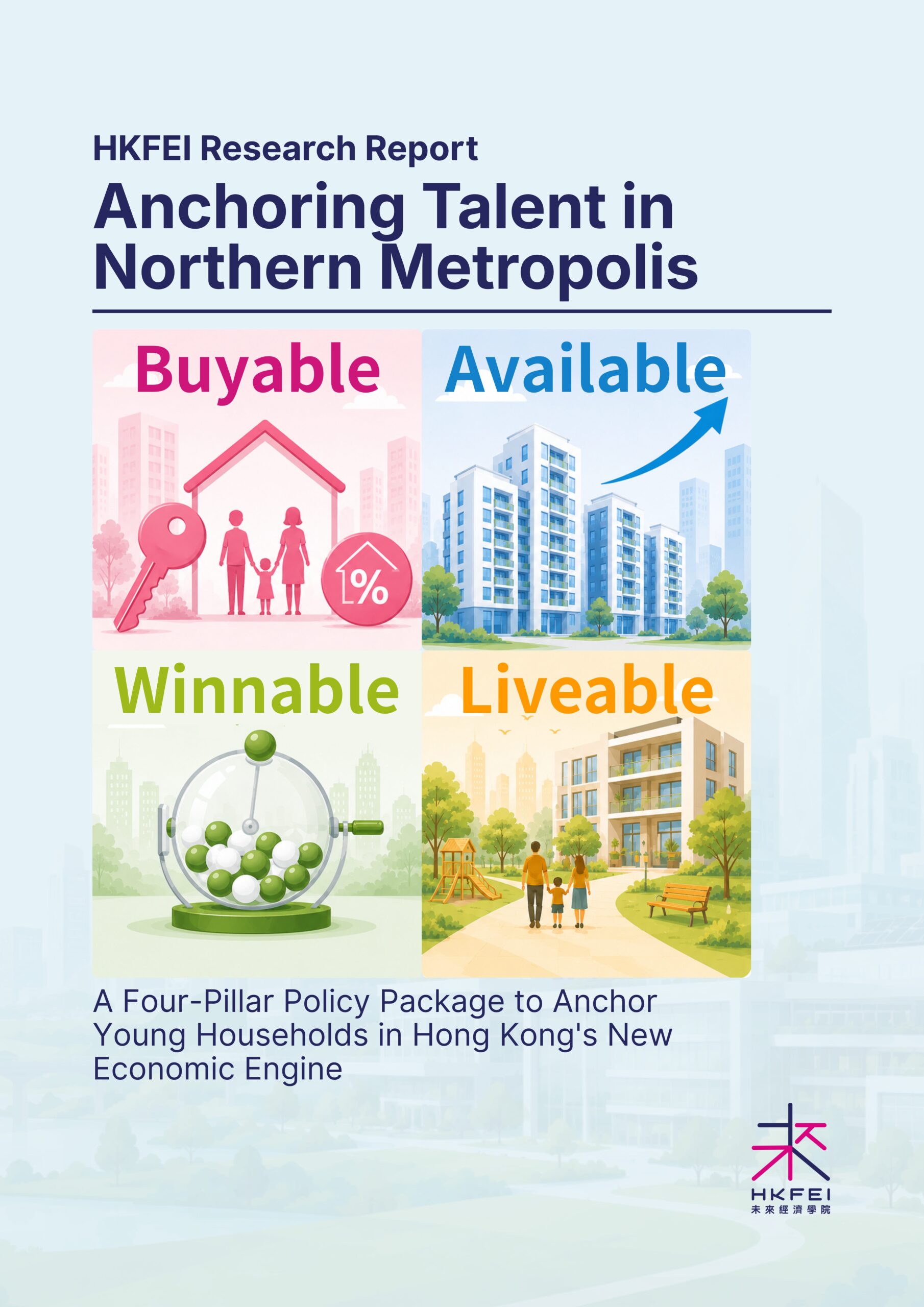
《Anchoring Talent in the Northern Metropolis: Four Policy Proposals to Help Young Households Put Down Roots in Hong Kong’s New Economic Engine》
We have released 《Anchoring Talent in the Northern Metropolis: Four Policy Proposals to Help Young Households Put Down Roots in Hong Kong’s New Economic Engine》. The study argues that for the Northern Metropolis to become Hong Kong’s new economic engine, it will need more than housing, railways and innovation hubs. It must also attract young working households to move in, become homeowners and put down long-term roots.
-
Can Hong Kong’s New Housing Hold People?
In Hong Kong’s housing statistics, one unit equals one unit — whether 27 square metres or 60. This equation has hidden what has truly happened over the past thirty years.
-
Two Housing Authority Measures — Directing Units to the Most Suitable Households
The Hong Kong Housing Authority’s two new measures — the Elderly Owner Flat-to-Flat Exchange Plan and the White Form Rental Plan — represent a welcome shift toward making subsidised housing genuinely mobile. The direction is right, but effectiveness will depend on participation, matching, and the Government’s willingness to scale up implementation.
-
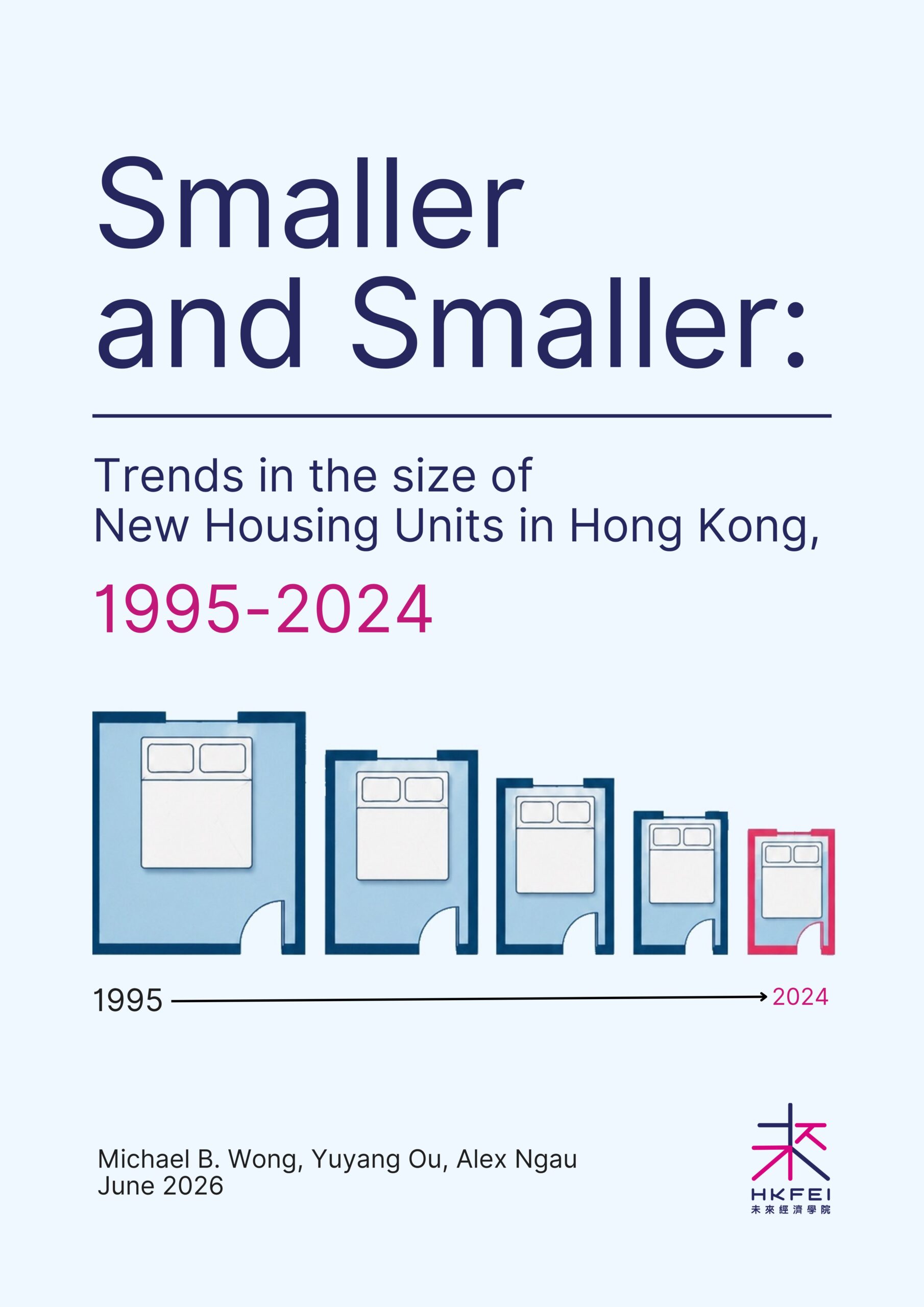
《Smaller and Smaller: Changes in the Size of Newly Completed Housing Units in Hong Kong, 1995–2024》
We have released Smaller and Smaller: Changes in the Size of Newly Completed Housing Units in Hong Kong, 1995–2024. The study finds that while Hong Kong’s housing supply has shown signs of recovery in terms of the number of units completed, the actual amount of newly added living space has not recovered in tandem. Relying on unit counts alone to assess…
-
Northern Metropolis Must Not Repeat Tin Shui Wai’s Mistakes: Public Housing Must Shift from “Rental” to “Homeownership”
As the Northern Metropolis takes shape, the government’s supply-side reforms are unprecedented — yet the market remains cool and the Tin Shui Wai lessons loom large. The authors argue that shifting public housing from ‘rent’ to ‘buy’ is essential to building a stable middle-class community and preventing a repeat of past mistakes.
-
From Ladder of Upward Mobility to a Ladder Fault Line — Generational Gaps in Hong Kong’s Public Housing Welfare
Drawing on nearly 40 years of data, the HKU Business School’s Hong Kong Economic Policy Green Paper 2026 reveals a serious ‘generational fault line’ in public housing welfare: younger generations now receive far less public housing support than older generations did at the same age. The authors call for sustained expansion of public housing supply to restore upward mobility for young people.
-
2025 Policy Address: The Right Direction on Homeownership Support, but the Effort Falls Short
The 2025 Policy Address rightly pivots from a sole focus on public rental housing toward helping citizens become homeowners and rebuild the housing ladder, but its six measures — from a larger Home Ownership Scheme supply to a modest White Form rental pilot — are too small to break the impasse.
-
Tenant Purchase Scheme Stalled — Sandwich-Class Upward Mobility Remains Elusive
Despite growing calls to relaunch Hong Kong’s Tenant Purchase Scheme, the government has once again declined, leaving the sandwich class without a viable pathway up the housing ladder. Three targeted fixes — unit circulation, fair pricing, and retained management — could unlock social mobility for tens of thousands of households.
-
Comprehensive Housing Policy Reform — Promoting Homeownership, Rebuilding the Housing Ladder, and Helping Young People Move Up
Hong Kong’s housing ladder has broken, leaving the homeownership rate far below peer economies at about 51%. The authors call for comprehensive reform — expanding HOS, emulating Singapore’s model, and coordinating housing, land, population, and economic policy.
-
HKFEI 2025 Policy Address Recommendations
The Hong Kong Future Economy Institute (HKFEI) submits six housing policy recommendations to the Chief Executive’s 2025 Policy Address consultation, urging reform of the housing supply system to rebuild the homeownership ladder, revitalise the subsidised housing market, and avert a long-term economic recession.
-
Tenant Purchase Scheme: From Failed Lessons to Universal Sharing
Reviewing the 1998 Tenant Purchase Scheme’s three design flaws — illiquid units, fragmented management rights, and fire-sale pricing — the authors argue the Government must first unlock turnover in subsidised-sale flats before relaunching any improved version to help citizens climb the housing ladder.