
Abstract
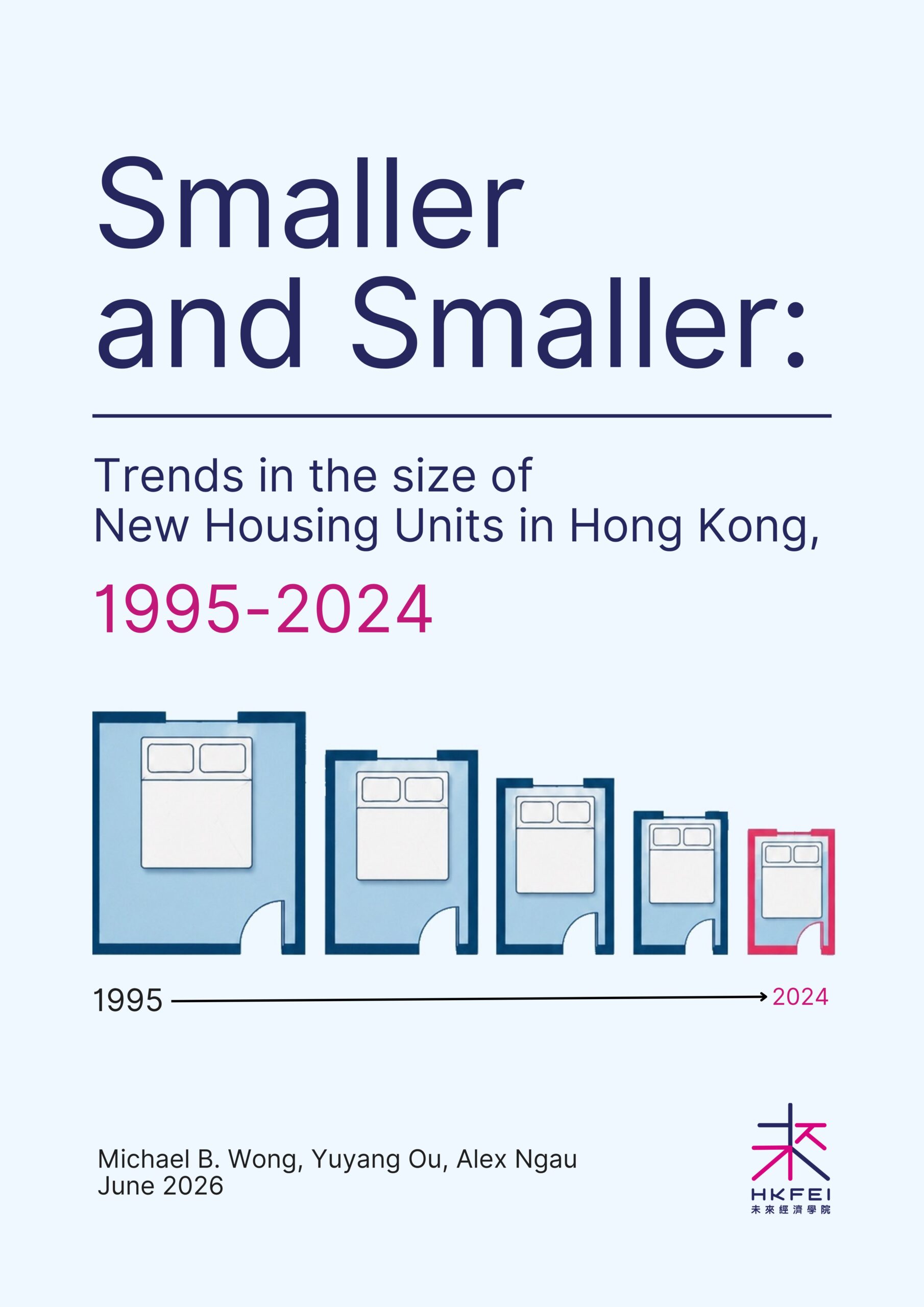
Hong Kong has made measurable progress on housing supply in recent years: completions have recovered from their post-2000 trough, public-housing output has risen, and the public-rental waiting time has fallen to 4.7 years. However, this progress is counted in unit numbers. Research by the Academy of Future Economics (hereinafter referred to as the Academy) found that homes in Hong Kong are being built “smaller and smaller.” Over the past three decades, the average size of a residential unit in Hong Kong fell from 50.4 square meters in 1995 to 37.2 square meters in 2024, the smallest in thirty years of records. The SAR Government has been actively improving citizens’ living environments in recent years. The Academy suggests that the government could go a step further: when formulating housing policies in the future, in addition to calculating the “number of new units,” it should also introduce the metric of “new total gross floor area,” so as to provide citizens with better living spaces.
1. Methodology
We track completions by size band across public rental, subsidised sale (HOS), and private housing from 1995
to 2024.
2. Findings
Average unit size has fallen by a quarter to a half in all three categories. Nearly half (46%) of the units completed in 2024 were under 40 m², up from 4% in 2000. The divergence is most pronounced for HOS: 2024 completions were 60% of the 2000 total by unit count, but only about 30% by floor area. Family-sized homes (70 m² or above) are declining in absolute numbers: private completions of such units fell 58%, from 33,642 in 2000–2004 to 14,187 in 2020–2024.
Smaller households partly offset this: estimated floor space per person was about 14 m² in both 1995 and 2024. But unit counts remain an inadequate measure of supply, and household size is itself partly endogenous to housing conditions. Nor is urban density the cause: new Hong Kong homes average about 37 m², roughly half the size of new homes in Tokyo (66 m²) or the United Kingdom (79 m²), while new Hong Kong public flats (about 27 m²) are roughly a third the size of new Singapore public flats (about 80 m²).
3. Policy Recommendations
Our study suggests that supply should be assessed by floor area as well as unit count; subsidised sale (HOS) flats should be built larger, through both a higher minimum and a higher average; and the subsidised housing mix should shift further toward larger ownership unit.