Policy Address
-
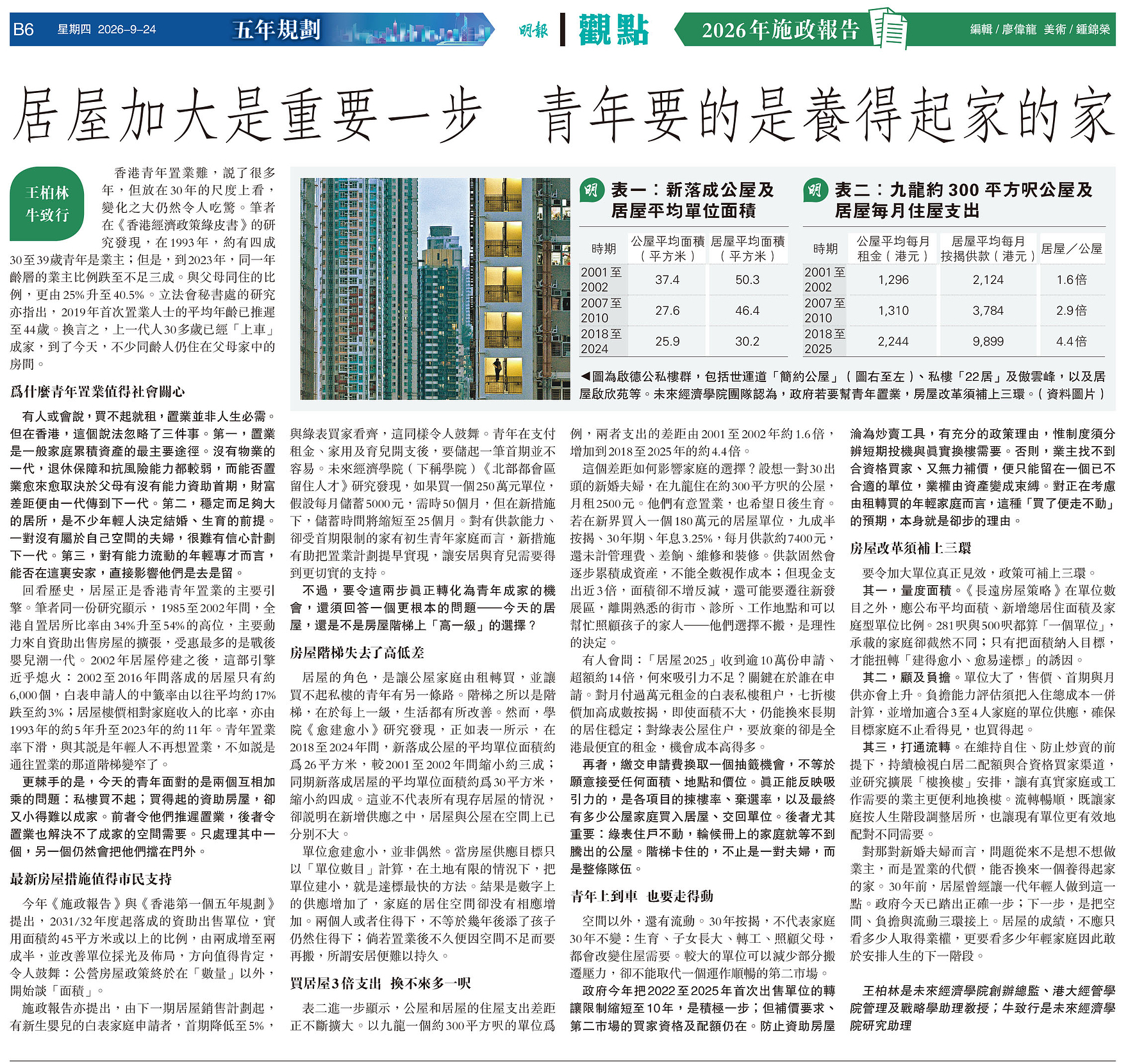
Larger HOS Flats Are an Important Step — Young People Need Homes Where They Can Afford to Raise a Family
Abstract: Hong Kong’s homeownership rate among younger households has fallen substantially, while smaller newly built subsidised flats and rising housing costs have weakened the appeal of moving up the housing ladder. This article argues that the Government’s move to provide more larger subsidised sale flats and lower down-payment requirements for some young families is an important step, but lasting reform must also address living space, affordability and housing mobility so that homeownership can provide a home in which young families can build their lives. The difficulty young people in Hong Kong face in buying a home has been discussed for many years. Yet, viewed over a 30-year period, the scale of the change remains striking. Our research for the Hong Kong Economic Policy Green Paper found that in 1993, around 40% of people aged 30 to 39 were homeowners. By 2023, the homeownership rate among the same age group had fallen to below 30%. Over the same period, the proportion living with their parents rose from 25% to 40.5%. Research by the Legislative Council Secretariat also found that, by 2019, the average age of first-time homebuyers had risen to 44. In other words, while many in the previous generation had already bought a home and started a family in their thirties, many people of the same age today are still living in a room in their parents’ home. Why Youth Homeownership Matters Some may argue that those who cannot afford to buy can simply rent, and that homeownership is not a necessity in life. In Hong Kong, however, this argument overlooks three important considerations. First, homeownership is the principal means through which ordinary families accumulate assets. A generation without property ownership has weaker retirement security and less capacity to withstand financial shocks. At the same time, whether young people can afford to…
-
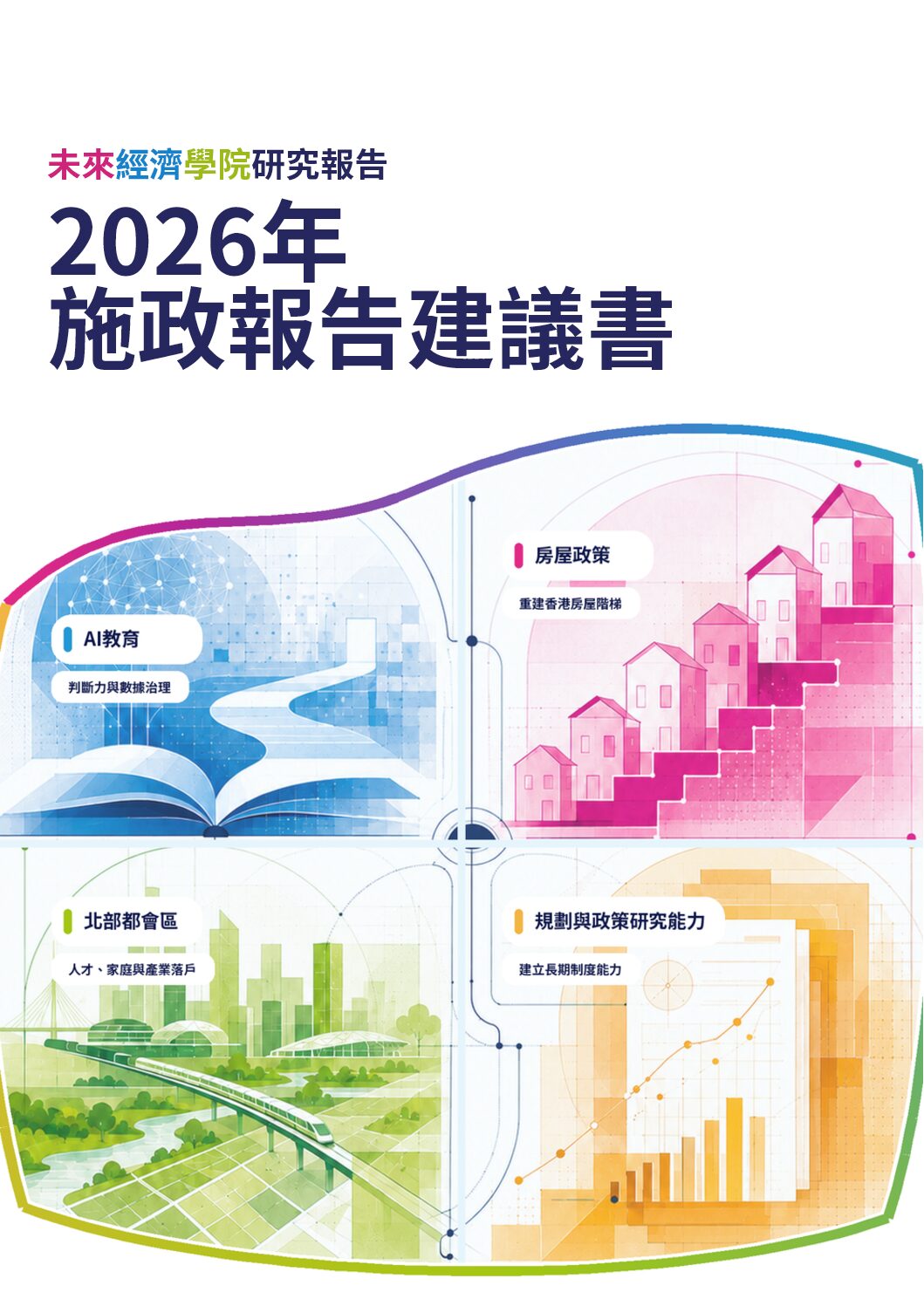
《HKFEI 2026 Policy Address Recommendations》
Hong Kong has laid a strong foundation for the next stage of growth, but the next policy challenge is no longer about how much more funding, units, land, or platforms to deliver — it is whether these investments actually improve the real choices available to students, families, talent, and businesses. The recommendations propose advancing Hong Kong from a model that prizes inputs and volume to an outcome-oriented, institutionally supported model of governance, with recommendations across four areas: AI in education, housing policy, the Northern Metropolis, and planning and policy-research capacity.
-
《HKFEI 2025 Policy Address Recommendations》
The Hong Kong Future Economy Institute (HKFEI) submits six housing policy recommendations to the Chief Executive’s 2025 Policy Address consultation, urging reform of the housing supply system to rebuild the homeownership ladder, revitalise the subsidised housing market, and avert a long-term economic recession.