The Northern Metropolis is Hong Kong’s largest spatial development project since the establishment of the HKSAR. It will not only accommodate a substantial share of the city’s future land and housing supply, but also serve as a critical platform for connecting with the Guangdong–Hong Kong–Macao Greater Bay Area, developing innovation and technology, attracting talent and supporting young people in establishing homes. The development of the Northern Metropolis should therefore proceed with determination. Its success, however, should not be measured solely by the completion of site formation, housing and infrastructure projects. The real challenge is to transform the Northern Metropolis from a construction project into both a lifestyle choice and a market choice—a place where residents want to settle, businesses want to invest, and educational and research institutions want to establish a presence.
In recent years, the Government has introduced a range of supply-side reforms relating to high-level coordination, land tendering, approval procedures and construction timelines. These efforts are moving in the right direction. Nevertheless, demand for commercial land and private-sector investment remains weak, suggesting that increasing the supply of land and housing alone may not be sufficient to create a vibrant new metropolitan area. If the first groups of residents have an overly homogeneous demographic and income profile, while employment, education, commerce, transport and community facilities fail to develop in tandem, the Northern Metropolis may repeat the early experience of some new towns, where residents moved in before adequate supporting facilities were available. It could ultimately become a “dormitory town” to which residents return only in the evening, or an inefficient district in which residential, industrial and commercial functions remain disconnected.
The Institute recommends that the next phase of Northern Metropolis policy move beyond supply-side construction towards demand activation, demographic planning and the integration of urban functions. Public housing in the Northern Metropolis should gradually shift from a rental-dominated model to one centred on subsidised home ownership. A 40:60 ratio of public rental housing to subsidised sale housing should serve as the baseline, with 30:70 adopted as a more ambitious target. Measures such as a 5% down payment for young White Form applicants, additional ballot weighting and pilot made-to-order housing schemes should also be introduced to encourage young families to settle in the area voluntarily. Planning regulations should move away from rigid single-use zoning and allow housing, offices, retail, education, childcare and community facilities to be developed together within the same neighbourhoods. The Northern Metropolis University Town should also be substantially expanded to establish a complete “education–research–industry–employment–housing” ecosystem.
As different parts of the Northern Metropolis are at different stages of development and offer varying scope for policy experimentation, these reforms should not be implemented across the entire area at once. The Institute recommends that Hung Shui Kiu and Ngau Tam Mei be prioritised as pilot areas. Hung Shui Kiu could focus on testing mixed-use development, business services and integrated “live–work” spaces for young people, while Ngau Tam Mei could serve as the principal pilot area for expanding the University Town and attracting education and research communities. The success of the Northern Metropolis should not be assessed solely by the number of homes and infrastructure projects completed, but by how many people choose to live, study, work, start businesses, purchase homes and raise the next generation there.
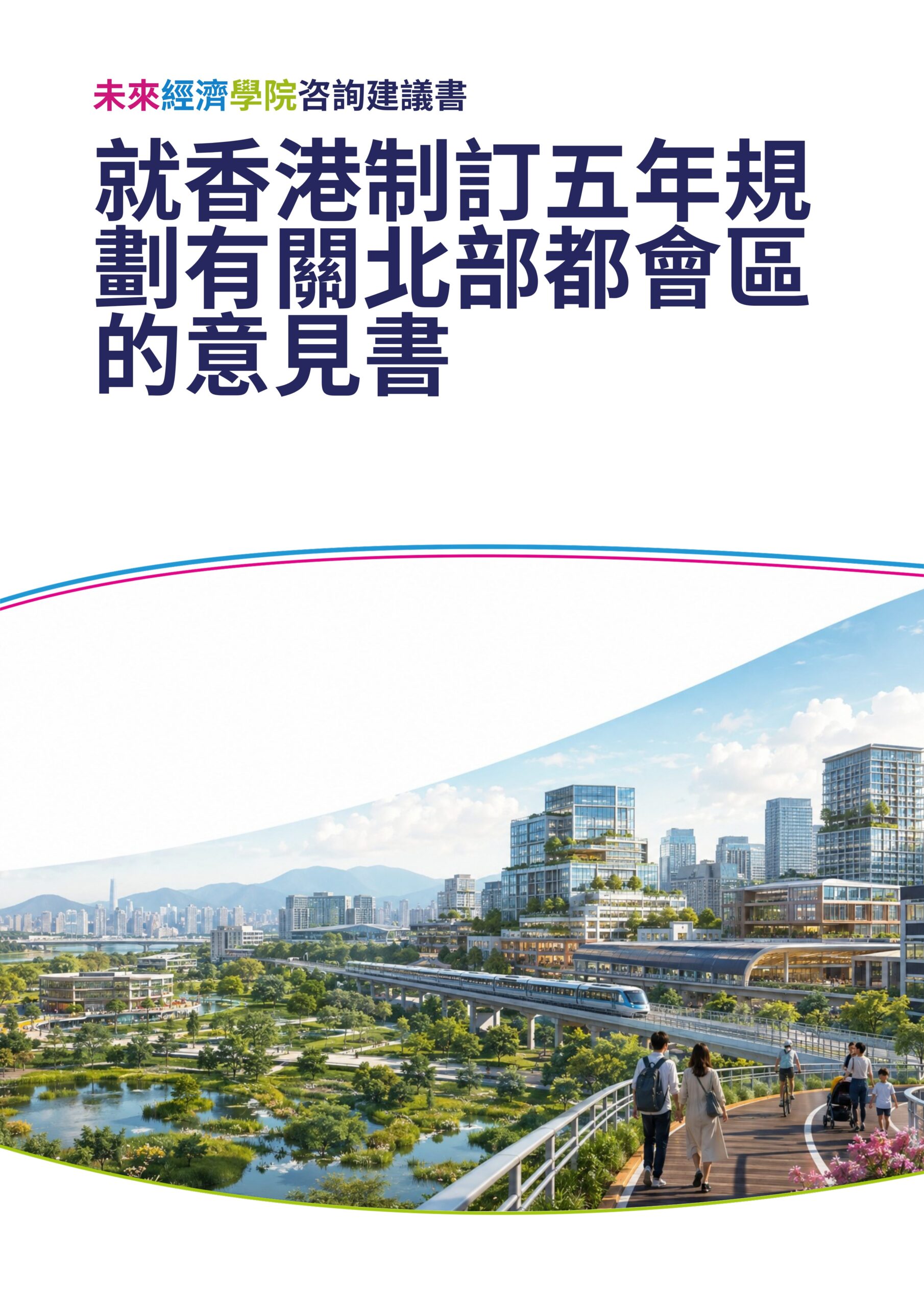
《Submission on the Northern Metropolis for Hong Kong’s Five-Year Plan》(Chinese Only)